

Philosophy
OUR VISION
VISION
EVERY CHILD IS GIFTED,THEY JUST UNWRAP THEIR PACKAGES AT DIFFERENT TIMES
At Scholars High we believe in enabling children to realize their own potential to excellence and to nurture their young minds through knowledge and exposure.
Our aim is to foster the child in all dimensions of his or her life – Moral, Spiritual, Cognitive, Emotional, Imaginative, Aesthetic, Social and Physical and to recognise and appreciate the MULTIPLE INTELLIGENCE and nurture the same . .
Therefore, an important goal of our curriculum is to enable children to learn, how to learn and to develop and appreciate the value and practice of lifelong learning.
*******************************************************************************************************************************************************************************
EVERY CHILD IS GIFTED, THEY JUST UNWRAP THEIR PACKAGES AT DIFFERENT TIMES.
At Scholar’s High we believe in enabling and empowering the children to realize their own potential to excellence and to nurture their young minds through knowledge and methodical exposure.
The Primary wing opens its arms to the little learners who walk into our world with expectations and desires. It is our endeavor to facilitate them to develop as social beings by guiding and inspiring them to interact and co-operate with each other.
Our Curriculum incorporates contemporary and effective educational thoughts and pedagogical practices. It represents a process of education delivery that is both evolutionary and development friendly. Our firm belief in practical experience in the real world, outside the classroom through varied hands-on activities have been our focus. Our aim is to foster multi-dimensional evolution in his or her life – Moral, Spiritual, Cognitive, Emotional, Imaginative, Aesthetic, Social and Physical.
In order to realize our vision of the child and education, our curriculum outlines a detailed and structured framework of content that is comprehensive and flexible. It promotes the active involvement of children in a learning process that is imaginative and stimulating. The ability to think critically and analytically; to apply learning with a practical approach and to develop flexibility and adaptability to the changing scenario ; imbibe creativity to be able to present unabashed, individualistic ideas with a plomb and these we believe are the necessary traits for success in life.
Various activities are designed round the year keeping in view the holistic development of children in mind. The school focuses on taking learning to another level through the celebration of subjects with printed certificates like Literary Genius, Techno mathematics, Speechifire etc. which gives an impetus to children’s retained interest in the scholastics.
The extensive reading program to enhance their imagination and promote worldly understanding besides developing their language listening skills is encouraged which again demands the involvement and collaboration of parents and mentors.
Assemblies are another important feature of our school life. They act as a medium to reflect our positive school ethos and value-based education through student’s participation and achievements.
Therefore, an important goal of our curriculum and vision is to enable children to learn, how to learn and to develop and appreciate the value and practice of lifelong learning.
[anchor]Our-Mission[/anchor]
OUR MISSION
MISSION
THE WHOLE PURPOSE OF EDUCATION IS TO TURN MIRRORS INTO WINDOWS…..
At Scholar’s High with our motto DREAM* STRIVE *ACHIEVE are marching ahead to
- Inspire creativity and personal excellence
- Cultivate academics and leadership
- Nurture diversity and be inclusive In our approach
The main objectives at the school, hence, is to take up the responsibility of grooming children holistically, strengthening the scholastic and co-scholastic areas while reinforcing the value system like compassion respect friendship optimism perseverance the sanskars to turn each “Scholarite” into a good Samaritan. We endeavour to collaborate with all stake holders to educate and guide children by maximising potential in all aspects.
*******************************************************************************************************************************************************************************
THE WHOLE PURPOSE OF EDUCATION IS TO TURN MIRRORS INTO WINDOWS…..
Education in middle and High schools has now become dynamic in its approach. The conventional notion of a classrooms with the students sitting attentively, while the teacher passing unvarying instructions and sharing bookish, impractical, indistinguishable knowledge, is a practice of past. There has been paradigm shift in the pedagogies from the old redundant system and specially now, it is constantly evolving hopefully for the better with each passing year.
The mission is a daunting one and thus needs detailed planning. The need of the hour is an educational system that works ‘for and with’ students. Keeping in mind the present generation’s curiosity and eagerness to learn. It becomes imperative to adopt an approach that would take care of innovative, student-centered learning environment, enabling an educator to deal effectively with students of distinctive mindsets in the same classroom.
Even an educator’s role is changing from the traditional ‘imparter of knowledge’ to that of coach and consultant. The students are now, not just allowed, but encouraged and required to take responsibility for much more of their learning. DIY (Do-it-yourself) Projects, student to student teaching, project-based learning are encouraged. Also, the integration of technology into every subject and all grade levels allows unprecedented improvement of teaching tools and environment.
Middle school offers maximum flexibility in terms of experiments and experimental learning. The age bracket of middle school learners are endowed with a lot of vitality that can be fruitfully maneuvered, on another hand are turbulent in terms of the emotional quotient, hence, sensitive handling and maintaining a delicate balance are imperative. Keeping all the above factors in view, we work with small groups of students who perform different learning tasks. Teachers provide guidance, and all students have the opportunity to participate in school activities and stage programs. They all also recognize and address adolescent’s developmental diversity.
Reality in the 21st century is quite contrary to the old methodology. We do perceive that our students come into the classroom with the same attitudes and expectations as the society in which they live, from diverse backgrounds and different school of thoughts. The main objectives at the school, hence, is to take up the responsibility of grooming children holistically, strengthening the scholastic and co-scholastic areas while reinforcing the ‘Sanskars’ (value system) to turn each “Scholarite” into a befitting citizen of the future.
Thus clearly the mission that we have embarked on, is to offer a healthy and exploratory curricular programs that encourages learner’s interest, provide age – appropriate guidance and counselling, ensure equal access to educational experiences, promote a positive school environment, and involve parents and families in educational process without downplaying academic achievement and appropriate behavior.
[anchor]Learning-Approach[/anchor]
Our Approach to Learning
Our curriculum has been designed to align with our mission and vision and envisage integrated learning experiences for children. Systematic planning with room for flexibility and adaptation to the individual circumstances and to the needs, aptitudes and interests of the children is strongly emphasized. We present content, approaches and methodologies in such ways to adapt and interpret the curriculum where necessary to meet learner’s own unique requirements. Learning thought experiences/opportunities, through play and fun, understanding and application forms the crux of our learning approach.
We adapt the following approaches and methodologies to teach different subject matter at different learning levels.
• Direct instructions / Lecture method
• Enrichment activity Exploration and research
• Integrated / Holistic methods
• Play way methods
• Dramatization or Story telling method
• First hand Experiences / Sensory Experiences
• Study Skills / Thinking Skills
• Organization Skills and Technology Skills
• Problem Solving and Decision Making
• Experiments and Demonstrations
• Presentation through different Media
• Reasoned Debate – Information and Reasons
• Cross Curricular Approach
• Individual Work / Pair /Work Group Work
Theory and Philosophy
We recognize that none of the philosophies of education provides all the answers, especially in a constant changing environment of our learners.
The school derives its educational influence from an eclectic path that attempts to synthesize, select and draw together aspects, ideas and values from different philosophies of education.
In a multi-racial, multi-regional, multi-religious, multi-cultural and multi-lingual society in today’s world, Scholar’s High attempts to blend both traditional and contemporary, western and eastern philosophical traditions.
Core Philosophy
We believe that every child is uniquely endowed with a different pace for learning Therefore, Scholar’s High School strives to accommodate individualistic needs of its learners.
We tickle their imagination for a faster grasp and encourage them to explore, experience, experiment and find their own path of discovery setting a stimulating environment where love, affection and joy brings out the best in them.
We have an education system that builds the learner’s character and empowers them in all aspects- mental, physical, emotional and social.
We are greatly inspired by Dr. Howard Gardner; the theory of multiple intelligences It suggests that the traditional notion of intelligence, based on I.Q. testing is far too limited. Instead he proposes eight different intelligences to account for a broader range of human potential in children and adults. These intelligences are :
Linguistic intelligence (“Word Smart”)
Logical-mathematical intelligence (“number/reasoning smart”)
Spatial intelligence (“picture smart”)
Bodily-Kinesthetic intelligence (“body smart”)
Musical intelligence (“music smart”)
Interpersonal intelligence (“People smart”)
Intrapersonal intelligence (“self smart”)
Naturalist intelligence (“nature smart”)
According to Dr. Gardner, schools and cultures focus most of their attention on linguistic and logical-mathematical intelligence. We esteem the highly articulate or logical people of our culture. and choose to underplay individuals who show gifts in other intelligence: the artists, architects, musicians, naturalists, designers, dancers, therapist, entrepreneurs, and others who enrich the world in which we live. Contrary to common practices we here at Scholar’s High try to reinforce, in fact celebrate and promote the importance of each of these instincts amongst students through various events and cultural activities and awareness weeks.
Theory and Philosophy
We recognize that none of the philosophies of education provides all the answers, especially in a constant changing environment of our learners.
The school derives its educational influence from an eclectic path that attempts to synthesize, select and draw together aspects, ideas and values from different philosophies of education.
In a multi-racial, multi-regional, multi-religious, multi-cultural and multi-lingual society in today’s world, Scholar’s High attempts to blend both traditional and contemporary, western and eastern philosophical traditions.
[anchor]Assessment[/anchor]
SCHOLAR's HIGH ASSESSMENT
In general assessment is the systematic process of documenting and using empirical methods to measure knowledge, skills, attitudes and beliefs. By taking the assessment, teachers try to improve the student’s path towards learning.
Teaching and learning must be meaningful and meet the needs of the of students. ‘Improvement’ is a key element when talking about assessment in the classroom. Assessment is important for the development of the instruction taking capacity. An evaluation is about showing the shortfalls and is judgmental while an assessment is about providing feedback and it is positive.
Principles of assessment in the classroom
• Evaluation done in cooperative spirit which is unambiguous and transparent.
• The fear of external examinations, settled in the minds of children from very tender age, is minimized with regular practice.
• Continuous and comprehensive evaluation done through keen observations, taking a holistic view of learner’s progress.
• The communication of the outcomes in positive manner, which in turn encourages learners to face this process readily rather than taking it as an imposed ordeal.
• Assessment for outcome monitoring which supports the enhancement of assessment policy and practice.
Scholastic Area
• Revision Assessments – It is a chapter wise assessment which is conducted after the completion of each chapter. Percentage is mentioned in the final results. This helps the students to understand each and every chapter thoroughly. It also helps students to :
• Check his/her Understanding of the Chapter.
• Reminds of the material forgotten by himself/herself
• Reinforce his/her learning
• Identify and fill gaps in his/her knowledge
• Chapter wise preparation which results in stress free education
• Opportunity for the teacher as well as students to improvise
• Periodic Assessment- There will be three periodic tests out of which the best two will be considered for final result.From time to time it is important to step back and systematically review the learning that has taken place to date across a whole subject, drawing on the full range of evidence available. This periodic assessment helps identify strengths and weaknesses in both individuals and groups and enables teachers to prioritize the next steps in teaching and learning. Unlike an end-of-year judgement, this type of assessment gives insight into learning needs at a point where action can be taken to address those needs. In this way, it helps to personalize future planning and ensure that pupils are appropriately challenged.
• Notebook Submission
Note book submission as part of internal assessment is aimed at enhancing seriousness of students towards preparing notes for the topics being taught in the classroom as well as assignments given.
• Subject Enrichment Activities
There are subject specific application and research related activities planned aimed at enrichment of the understanding and skill developments.
Language – Speaking and listening skill
Science – Practical Lab Work
Mathematics – Maths Lab Practical
Social Science – Map Work and Project
• Summative Assessments – Objective and Subjective tests conducted at the end of each term for all scholastic subjects. Summative assessments are designed to determine whether or not a module’s learning objectives have been achieved. This strategy is also an essential part of the learning process, as it can help you determine whether or not the learner is ready to move onto the next section.
• External Assessments- SOF& U C MAS
[anchor]Learn[/anchor]
Learning Environment
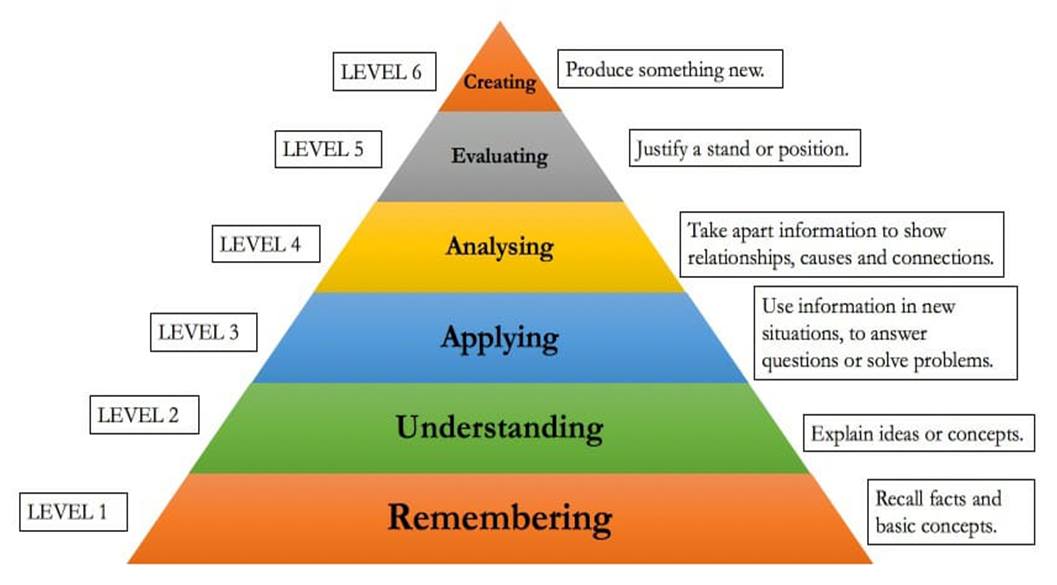
The learning environment at Scholar’s High has always been student/ learner centric. Besides to create a good learning environment we have tried to build a good relationship with students and parents alike which is based on trust, rapport and clear communication with a creative environment, safe space and motivational culture respecting the diversity of views amongst them who are challenged and supported to achieve high goals. We follow the booms taxonomy for learning and assessment methods with the goal to encourage higher order thinking and amplify cognitive skills.
[anchor]LSO[/anchor]
LSO And Community Project
Why life skill development and community projects(LSCP) at school?
In an ever-growing technology and data driven world, much of the focus in education has understandably taken a shift towards STEM-based (science, technology, engineering and math) initiatives that will prepare students for the coursework and careers of the future. But life skills—how well equipped students are to make good decisions and solve problems in their academic and professional careers as well as their personal lives—should also play a critical role in a well-rounded and comprehensive education.
What is Life Skills-Based Education?
Think of life skills as the building blocks or framework that allow students to apply the knowledge they acquire in school to real world problems and situations. Also referred to as “Soft Skills” in a professional context, the ability to think abstractly and approach problems from multiple angles to find practical solutions, and the skill to communicate clearly and effectively are just as important as technical knowledge in a particular field or academic subject.
But life skills go well beyond choosing a major in college or impressing a potential employer in the future. Life skills provide children with important tools for development, such as independent thinking, how to socialize and make new friends, and how to take action in situations where their parents or teachers may not be around to help or intervene (dealing with a bully or personal insecurities and fears, for example). Unlike motor skills and basic intelligence, execution function and decision-making skills are not innate but learned.
Examples of life skills include:
• Self reflection
• Critical thinking
• Problem Solving
• Interpersonal Skills
• The Benefits of Teaching Life Skills at a Young Age
• Building life skills is an essential exercise in helping children makes sound judgment and good habits for long-term stability, wellness and success.
How We have Been Promoting Life Skills for Young Students
Parents taking an active role in teaching life-skills at home with projects that provide real world examples and lessons in decision making and problem solving further enhance its importance. They can be as simple as assigning household chores and budgeting exercises through an allowance, to care for a pet or volunteering in the community.
Fun and simple-to-organize activities, like game nights (or afternoons) with family and friends with an educational focus that also encourage working in teams, can help to build social and interpersonal skills.
Everyday Survival Skills
In addition to brushing their own teeth and learning how to tie their shoes and get dressed, young children should know what to do in common situations as well as emergencies such as:
• How to get to and from home and school
• Who to call in an emergency (memorize phone numbers)
• How to safely cross the street
• What to do if they are bullied or witness bullying
• How to safely use kitchen appliances and prepare basic meals
• How to do the laundry
Core agenda and Objectives
To encourage ground learning- Provide opportunities to demonstrate how school activities connect to students lives with the “community as the laboratory” for real life learning lessons in actual situations. Students become engaged learners once they can see the relevance.
To resonate the power of relevance, injecting value and meaning into the entire school experience- Young people need to feel that what they are doing makes a difference, contributes to the welfare of others and believe that they too can make a change. It provides the whole picture of the society our students live in.
To build social capital- In the race of developing human capital in the form of scientific, engineering expertise or sophisticated forms of literacy leading to economic expansion, social capital often gets neglected. Schools core responsibility is to develop “whole system thinking” by demonstrating that society consists of groups and sub groups but they all are part of one universe. And through house system we try to inculcate team spirit and trust. Competitions (Inter-house, Inter School) makes them competitive to face the real world and to outshine.
Create civic habits of the heart- Each act of honesty, service, responsibility and compassion that teachers and educators encourage and model helps create moral and civic habits of the heart and instill courage to care. These habits, shaped over a lifetime define individual conscience and determine how a person will respond when fellow human beings are hurt, attacked or victimized. Trips to Leprosy camp, Orphanage makes our students compassionate.
To build leaders- As a society we are facing a range of challenges. Solutions seem much likely to emerge from people who apply theintelligence and competence to immediate problems that demand their attention. We require more people who have the capacity to make the difference, who step forward to do so. Active participants in team sports, Extempore (English-Hindi), Monitoring system in class makes them future leaders. Morning Assembly each and every child get the opportunity to be on stage.
Allow democracy to become a habit- As we go back and forth between living it and studying it, over and over, looking at democracy becoming a way of life. When students discover the interdependence of people from different social backgrounds and they learn to relate to them as equals. We are constantly asking students to give respect to each and every individual including our Didi (maids) and Bhaiya (driver) to sensitize them of importance of each individual. They practice election process for the election of Head Boy and Head Girl, House Captains and Class Monitors
Projects are announced from time to time that give necessary exposure to the children who are expected to participate voluntarily to imbibe these life skills. These are not enforced on the students .We have a yearly Charity Mela, the proceeds of which are shared throughout the year for various charitable and worthy causes .We expect parents to use their discretional consciousness to help us imbibe the same by being sensitive and appreciative for our endeavors.
Other Clubs & Activities
• Health and wellness club: yoga exercise healthy habits nutritional awareness
• Eco club:Preservation of resources water, electricity, green drive, plantation
• Heritage club: Planning of visitation to Heritage sites to create awareness or giving a theme for fancy dress
• Integrity club: Family values virtues good mannerisms time management work ethics etc
• Reading club: book critiquing identifying books reading summary character recommendation to friend alternative story lines
• Film appreciation club
• Photography club
• Art and craft club
• Cooking club
• Quiz club
• Chess
• Carom
• Rubik cube
• Dramatics
• Social service
• Dance
• Music
• Singing
• Sports
• STEM club: (Science, Technology, Engineering and Math related activities)